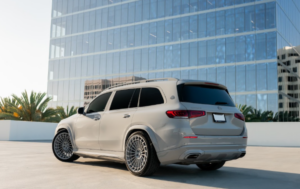
The history of Mercedes-Benz is deeply intertwined with the very origins of the automobile. The German brand, established in 1926, has become synonymous with luxury, innovation, and the evolution of vehicular transportation.
The roots of Mercedes-Benz stretch back to the late 19th century, when pioneering inventors Gottlieb Daimler and Carl Benz independently developed their motor vehicles. The culmination of their efforts marked the birth of the automobile, an invention that would forever change the landscape of personal and commercial transport.
It all began with Karl Benz’s three-wheeled motor car in 1886, which was recognized as the first automobile designed to generate its power. Around the same period, Gottlieb Daimler was perfecting his motor carriage. These groundbreaking inventions laid the groundwork for a new industry and the eventual merger that would result in the formation of the iconic brand.
Mercedes-Benz, headquartered in Stuttgart, Baden-Württemberg, Germany, encapsulates a legacy of crafting vehicles at the forefront of luxurious design, technical innovation, and performance.
Mercedes-Benz has delivered on its reputation as a provider of premium automobiles. The brand name itself is a beacon of automotive excellence and stands as a testament to the company’s long-standing heritage in leading automotive production and design.
With a commitment to quality and pushing the boundaries of technology, Mercedes-Benz continues to be a pivotal force in defining the standards of the automotive industry worldwide.
Founding and Early Years
The inception of Mercedes-Benz hinged on the merging of vision and innovation by the automotive pioneers Karl Benz and Gottlieb Daimler.
Inception of the Brand
Karl Benz’s origins as a pivotal figure in automotive history began in 1886 with the creation of the Benz Patent Motor Car, widely considered to be the first true automobile. This was paralleled by Gottlieb Daimler’s developments in motorized transport.
Though they worked independently, Benz and Daimler laid the foundation for the evolution of the Mercedes-Benz brand. Daimler’s 1890 co-founding of Daimler-Motoren-Gesellschaft (DMG) in Cannstatt marked a significant step in automotive history.
Notable Founding Figures
Although they never collaborated directly, Karl Benz and Gottlieb Daimler were the key figures behind Mercedes-Benz’s early years. Wilhelm Maybach, Daimler’s long-time partner, also played a critical role as an ingenious engineer.
Following Daimler’s death in 1900, his business moved forward under Maybach’s technical guidance. The genesis of the Mercedes brand name is tied to Daimler’s DMG and Emil Jellinek, an influential automobile entrepreneur who named the cars after his daughter, Mercedes.
| Key Figures | Contribution |
| Karl Benz | Developed the first true automobile (1886) |
| Gottlieb Daimler | Innovated transport tech, co-founded DMG. |
| Wilhelm Maybach | Chief designer at DMG, advanced automobile engineering |
Key Early Models
The Mercedes 35 HP, introduced in 1901, was a pivotal model designed by Wilhelm Maybach. Instrumental in defining modern automobile design, it distinguished itself with a lower center of gravity and a frame that eschewed the carriage style of its predecessors.
The success of these early models set the stage for the 1926 merger of Benz & Cie. with DMG to form Daimler-Benz AG, effectively marking the beginning of the Mercedes-Benz brand as it is known today.
| Early Models | Features | Impact |
| Benz Patent Motor Car | First true automobile | Gave rise to individual mobility |
| Mercedes 35 HP | Lower center of gravity | Defined modern automobile design |
Evolution and Innovation
Mercedes-Benz, a name synonymous with automotive excellence, has cultivated a rich history of evolution and innovation in the automotive industry. Significant engineering feats, design milestones, and technological advancements mark this.
Advancements in Engineering
- Internal Combustion Engine: The journey of Mercedes-Benz’s engineering excellence began with the development of the internal combustion engine, an invention that revolutionized personal transportation.
- Honeycomb Radiator: This iconic engineering design was introduced to improve engine cooling efficiency, a testament to Mercedes-Benz’s commitment to engineering innovation.
Design and Performance
- Three-Pointed Star: Mercedes-Benz vehicles are instantly recognizable by the three-pointed star, a symbol of the brand’s ambition to create unparalleled vehicles.
- The star signifies dominance in land, sea, and air transportation.
- Aerodynamics and Aesthetic: Striking a balance between form and function, Mercedes-Benz has continually pushed the boundaries of automotive design and performance.
Safety and Technology
- Safety Innovations: From the inception of the crash-test program to contemporary safety systems, Mercedes-Benz has always prioritized passenger safety.
- Innovations include the development of crumple zones and the introduction of anti-lock braking systems (ABS).
- Technological Progress: In pursuit of technological advancement, Mercedes-Benz has integrated intelligent driving features and sustainable practices like electric mobility into its modern lineup.
- This includes advancements in autonomous driving tech and connectivity.
Expansion and Global Presence
Mercedes-Benz has grown significantly, establishing a global footprint through strategic mergers, partnerships, and brand diversification. This expansion solidifies its position in the worldwide market.
Rise of Mercedes-Benz AG
Mercedes-Benz AG, originally part of Daimler-Benz, embarked on an ambitious path to increase its global presence. The company mastered the art of combining luxury with technological innovation, allowing it to cater to a diverse clientele across various regions.
The United States became a key market, with Mercedes-Benz Cars and Vans gaining substantial traction.
Mergers and Partnerships
In the late 1990s, Daimler-Benz AG merged significantly with Chrysler Corporation, forming DaimlerChrysler. The goal was to combine strengths and expand their global presence.
Although later Daimler AG divested Chrysler, this period marked Daimler’s earnest drive towards a worldwide footprint.
Collaboration with BYD Auto to introduce Denza, an electric vehicle brand in China, and the establishment of Beijing Benz, a manufacturing venture, further reflect Daimler’s commitment to growth in international markets.
Brand Diversification
Under leadership figures such as Ola Källenius, Mercedes-Benz has continued diversifying its product range, embracing advances in electric mobility and offering a suite of vehicles under Mercedes-Benz Cars and Vans.
This diversity in product offerings ensures the brand’s relevance in multiple automotive market sectors.
Motorsport Legacy and Influence
Mercedes-Benz is not just a luxury vehicle manufacturer; its involvement in motorsport has shaped its legacy, influencing consumer model performance and embodying a racing spirit that continues to drive innovation.
Racing Milestones
Mercedes-Benz’s storied history in motorsport dates back to its participation in the world’s first motor race in 1894, from Paris to Rouen. Since then, it has notched significant achievements, such as:
- 1900s: The brand gained early recognition with cars like the Mercedes 35 hp.
- 1930s: The Silver Arrows era began, with Mercedes dominating Grand Prix racing.
- 1952: The introduction of the legendary 300SL Gullwing, a direct descendant of Mercedes’ racing efforts.
- Late 1920s: The SSK model represented a pinnacle in sports car performance, and it competed and won in numerous events.
Formula One Achievements
Mercedes-AMG entered Formula One, solidifying its reputation for excellence:
- Lewis Hamilton: Secured multiple World Championships, reinforcing the team’s dominance.
- Nico Rosberg: Achieved a World Championship in 2016 before retiring at the pinnacle of the sport.
- The team’s consistent performance since introducing the hybrid turbo era in 2014 sets a high benchmark, with advancements in engine technology leading to success on the track.
Impact on Consumer Models
The transfer of technology from racing to road cars is evident in Mercedes-Benz’s offerings:
- AMG® Badge: Now synonymous with high performance, as found on several consumer models.
- Engineering: Developments in lightweight construction, aerodynamics, and engine technology in the motorsport arena influence the brand’s production vehicles.
Marrying racing heritage with consumer car performance, Mercedes-Benz has created a legacy that car and motorsport enthusiasts recognize and respect.